There is a bronze rain drum on our terrace, and most evenings I forget it is anything special. But it is.
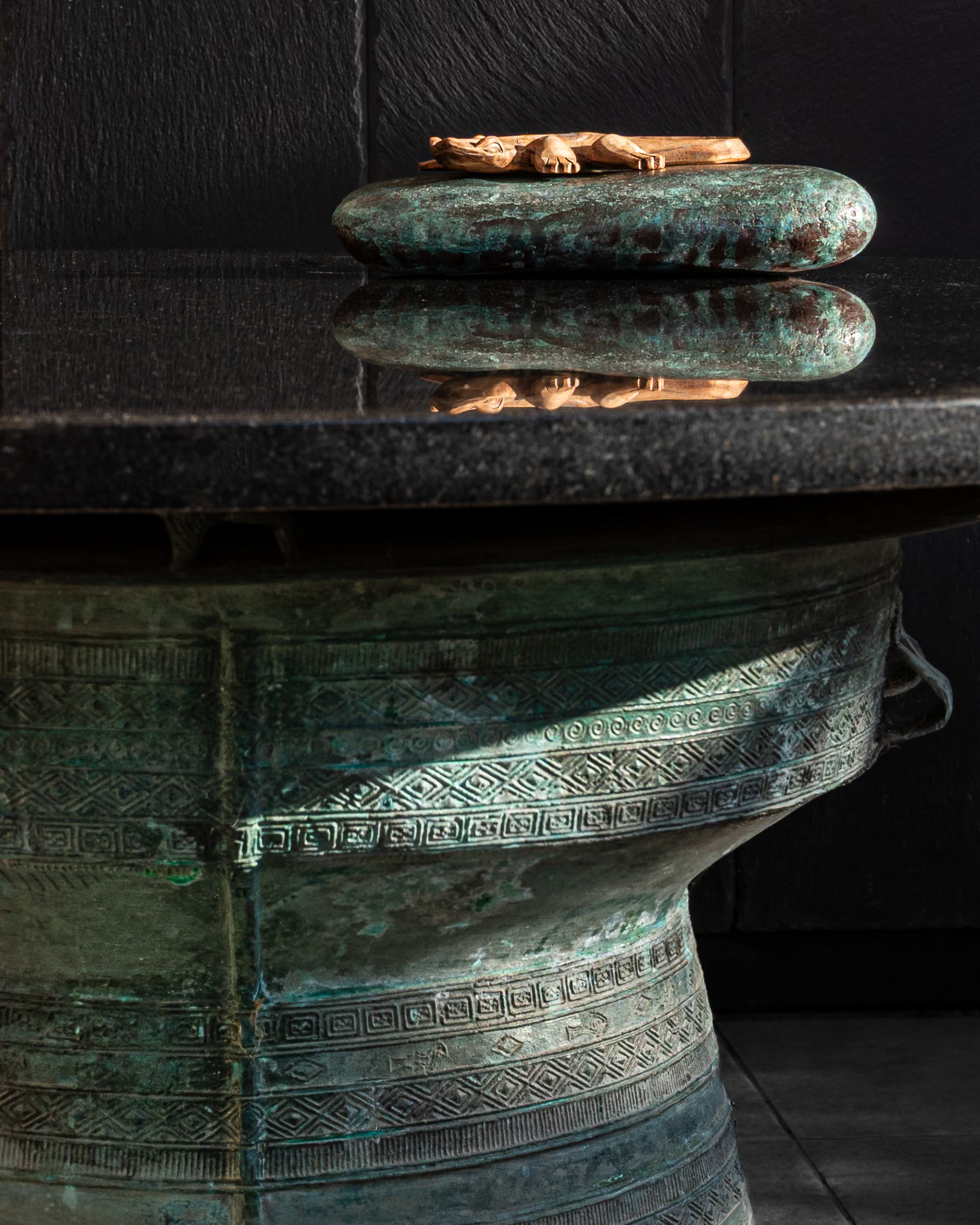
The rain drum is one of the oldest cast-bronze forms in Southeast Asia, a ceremonial object once beaten and tuned, its makers believed, to call the weather in. That tradition runs back more than two thousand years, and drums are still cast in its likeness today. Ours carries all of that history in its form: bronze gone the colour of old sea-glass, a soft blue-green no one could paint on. It holds up a slab of black granite and works as a table. On the granite sits a single carved wooden lizard, warm and honey-toned, catching a thin sliver of late afternoon light, and the polished stone hands his reflection quietly back to him. Nothing in the arrangement shouts, but the contrasting colours and natural materials provide a unique combination that is impossible not to notice.
Why one object can do the work of ten
The instinct, when we want a room to feel finished, is to add. Another cushion, another vase, a second lamp for balance. More often than not, adding is what flattens a room. Every new thing asks for a share of the attention until nothing holds any of it.
Styling is the opposite discipline. It is subtraction with intent: you choose the few things worth looking at, then give them the room, the light, and the quiet they need to be observed and appreciated. The drum earns its place here many times over.
- It carries age. A space with one piece that wears its history feels rooted, however new everything else is. That sense of time is the one thing you cannot buy in a flat-pack.
- It carries contrast. Cool, aged, oxidised bronze against hard modern granite and the soft honey-toned wood. Contrast is what stops the eye, and a stopped eye is an interested one.
- It carries a single warm note. In a dark, cool space, that one wooden lizard is the whole temperature of the picture. Give a setting one warm point and the eye goes straight to it, every time.
A piece that can go anywhere
Here is the quiet advantage of a pairing like this: there is nowhere it cannot go. Ours happens to live outdoors, on a terrace open to the full swing of a Cyprus year, the flat harsh glare of summer and the rain that comes in winter. That is about the most hostile spot you can ask a beautiful object to survive, and this one does more than survive it, it improves. The bronze deepens, the patina settles, and every season adds to the piece rather than taking anything from it. There is a small irony in that, too: a form first cast to call the rain now sits happily out in it. The granite on top is simply immune, timeless and ageless, the same slab in a decade that it is today, untroubled by sun or storm. Between them they demand almost nothing, an occasional wipe and little else. Pass the test of a bare terrace and everything after it is easy: a shaded hall, a sunlit corner, an entrance, a courtyard, indoors or out, there is no place in a home this pairing cannot hold.
The detail doing the quiet work
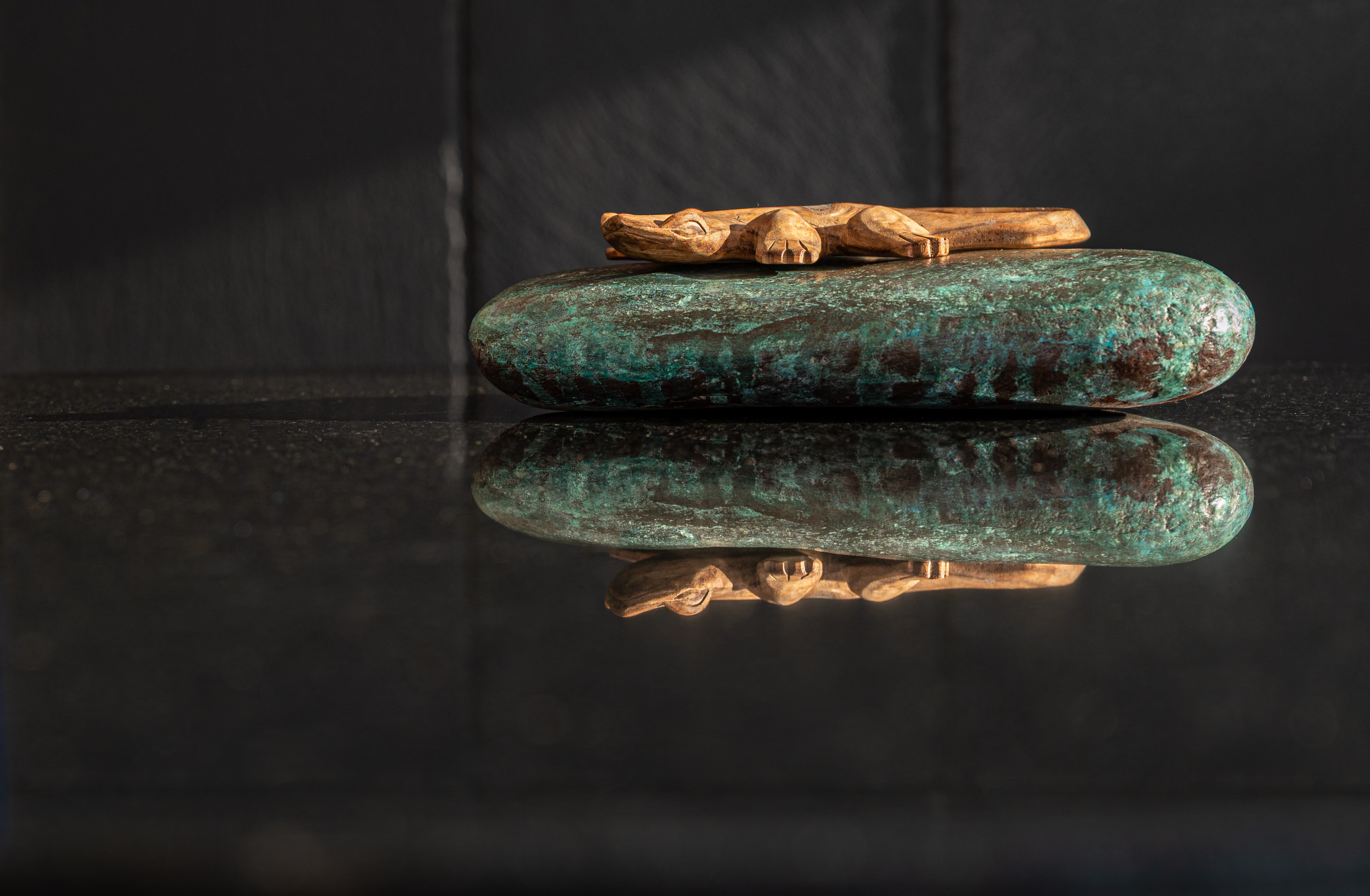
Look closely and the reflection is doing something clever. The granite doubles the lizard and the stone, so the smallest object in the frame becomes, for a moment, the busiest part of it. That is placement, not luck, and it is exactly the kind of thing a photograph either captures or throws away.
Styling decides what is worth looking at. The photograph decides whether anyone ever gets to look at it.
It still has to survive the photograph
Here is where styling for a home and styling for a let part ways, and then meet again. If this were only a private corner of our own terrace, the job would end the moment it felt right to sit beside on a summer evening. But more and more of the homes we style are also earning their keep as holiday lets, and a guest meets those first as a thumbnail on a screen, a few centimetres wide, scrolled past in half a second.
A beautifully styled space that is badly photographed simply does not exist to that guest. They never see it. The feeling has to survive the compression, the small screen, the fast scroll. So we shoot what we style: deep enough focus that the tooled bands on the bronze stay crisp, light placed so that one warm note still reads at thumbnail size. The styling creates the feeling; the photograph is what carries it to the person deciding where to spend their holiday.
Whether it's a home you live in, or a home you let
The principle does not change with the postcode of the intent. A considered space rewards the person standing in it, with calm, with a little pride, with the small daily pleasure of stepping outside your own door and liking what you see. When that space is also a let, that same feeling is the thing that fills the calendar: the guest chooses your place over the identical one next door, and remembers it enough to come back.
One old drum taught us most of that. We would happily do the same for your rooms and terraces.