The most striking object in a room is often one you can collect for nothing. It takes a few seconds of attention, not a creative gift.
A bare branch with a real bend in it. A cluster of seed heads. A sheet of bark, a stone from the beach. They wait in hedgerows and on roadsides, and almost nobody picks them up, because almost nobody sees them.
Much of our styling starts from this idea. Natural finds, chosen with care and given room, bring a space warmth, texture and a quiet focal point that few things off the shelf can. You don't need to be a DIYer or have a designer's eye. You need to start seeing.
Looking is automatic. Seeing is a decision.
We pass hundreds of things every day and register almost none of them. Most of what comes in front of us quickly gets a name: road, wall, car, dead weeds. Once it has been given that name, we are finished with it. Seeing begins when you let the name wait.
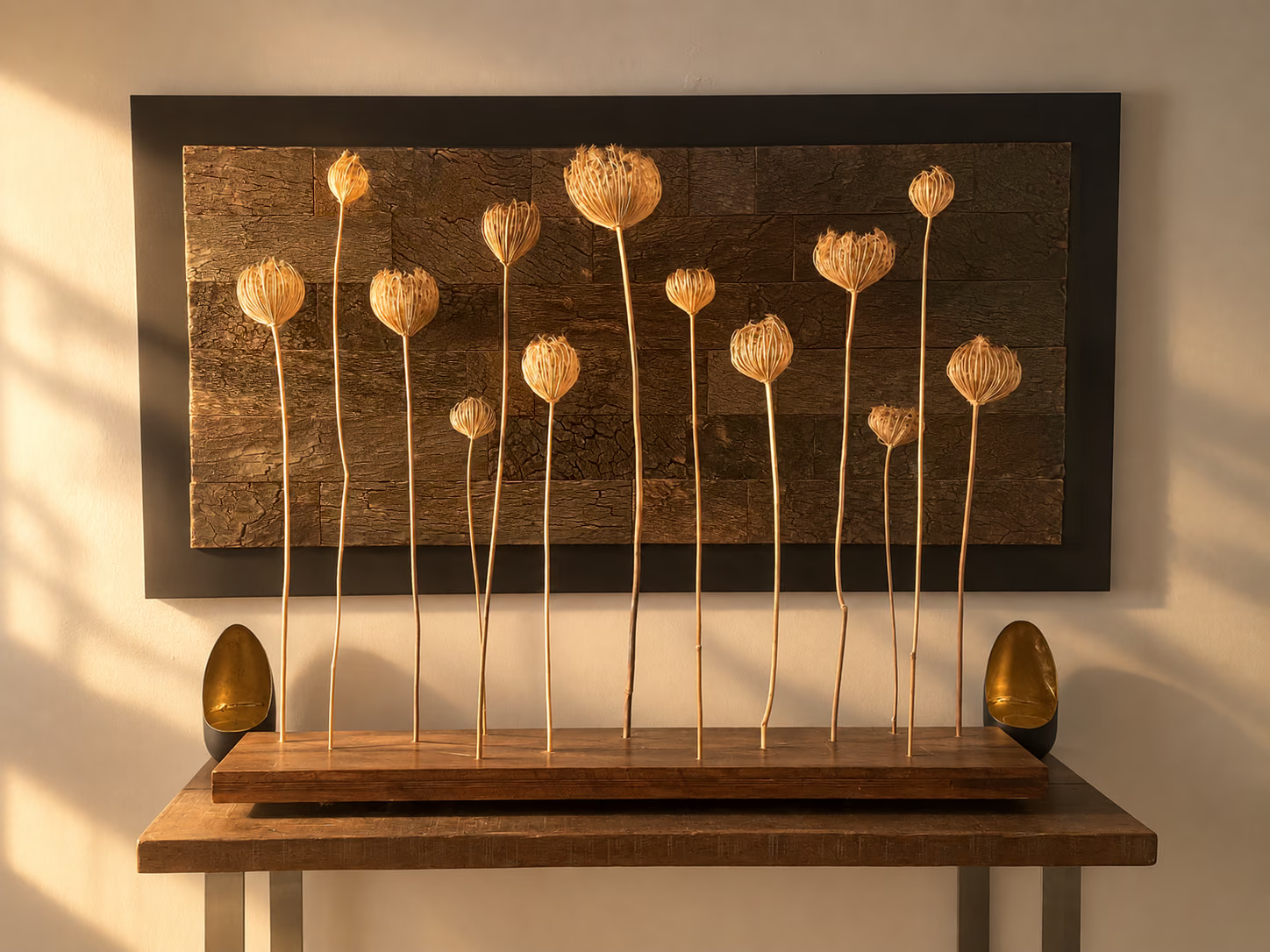
Take wild carrot. All summer, roadsides are white with it. By the end of August it has gone brown and brittle, and nobody gives it a second glance. Stop for five seconds and the "dead weed" turns into something else. As the flower head dried, it drew itself inward into a small cage of fine ribs, holding its seeds inside. Some have closed into woven lanterns; others have opened out again, ready to let the seeds go. Light passes through the edges and throws a fine shadow on the wall behind. Picked and stood on a console table, it warms a room without taking it over. It was never meant to.

The habit, not the plant
We have used the wild carrot here because it is what is standing outside at the moment. It is only an example. The habit is the point, and once you have it, it does not switch off again. Before long you will see potential where once you saw nothing of value.
Bare branches with a real bend in them, the kind that follow a curve you could not draw. Grasses gone to seed. Pine cones, which everyone dismisses precisely because they are free and everywhere. Bark that has come off a trunk in one clean sheet. Driftwood split along the grain and sanded smooth by the sea. Pods from plants whose names we have never learned. An olive pruning too crooked to stack neatly with the firewood.
Gary wrote here a while ago about a bronze drum we have had for years, and how one good object can do more for a room than a shelf of ornaments. He is right, and this is the same argument arriving from the far end of the price list. That drum was cast by someone, bought, shipped and kept for decades. The wild carrot was growing at the side of a road and cost us the time it took to pull over. In a room, they do the same job.
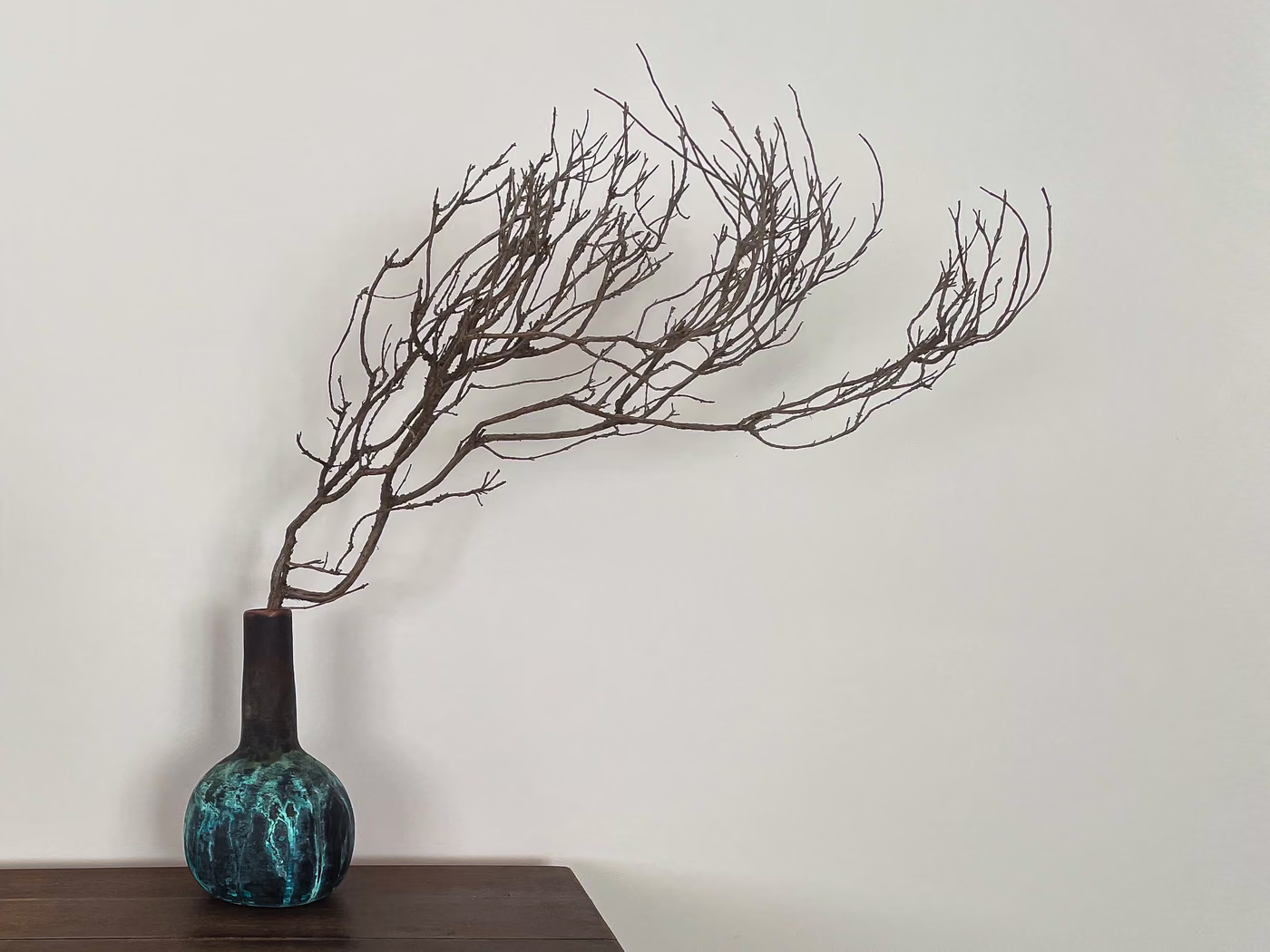
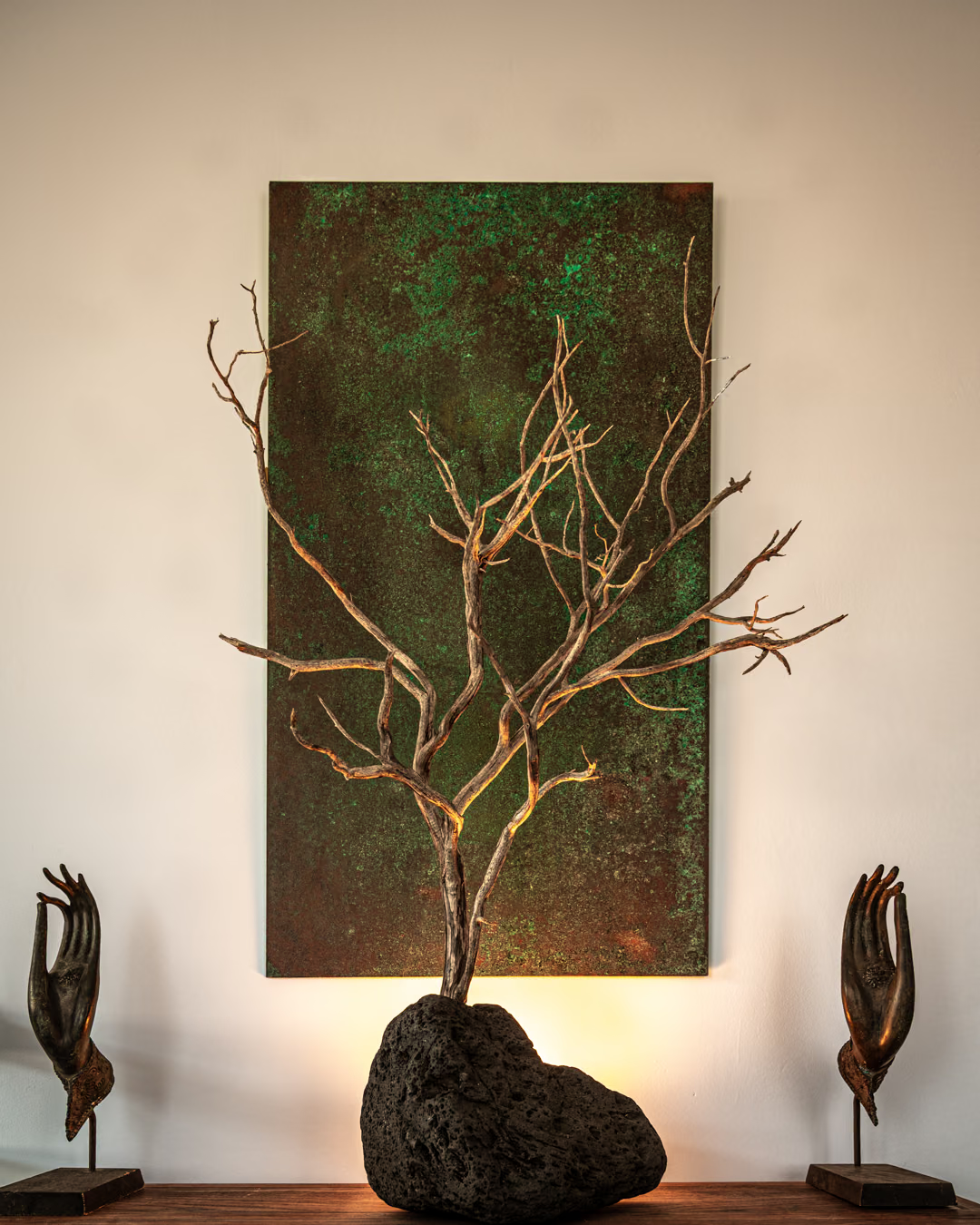
A branch is the easiest place to start. A rosemary branch, dried into a windswept line no florist could supply, needs nothing more than a vessel with some character and a blank wall behind it. A branch with more structure, set into a piece of stone and lit from behind, becomes closer to sculpture. Neither took skill. Both took the decision to pick it up.
What imperfection gives a room
Stems from a shop are grown, graded and packed to be consistent: even lengths, even colour, every head the same size. That is also why they sink into the background within a fortnight.
What you gather yourself has not been sorted by anybody. It comes with the bend the wind put in it, the head that dried lopsided, the stem that grew around something in its way. In the philosophy of wabi-sabi, these are not flaws. They are the point: beauty that is imperfect, impermanent and unfinished. A dried stem will not last forever, and it doesn't need to. Enjoy it while it is there, and replace it next season with whatever is standing outside then.
Give it room
Restraint is most of the work. A few stems given space on a plain surface read as a decision. Forty of them, joined by cones, shells and a bowl of pods, read as a school craft table. What we come back to:
- One placement. Choose a single find and let it lead.
- A plain background. Plaster, timber, cork or stone lets the silhouette stand out.
- Space around it. Empty surface is part of the composition.
- Good light. Side or back light throws shadows onto the wall and makes translucent edges glow.
Choose a vessel or base that suits the material, such as raw ceramic, stone or plain timber.
And a note on collecting: take only what you need, leave plenty behind, and stay clear of protected species, nature reserves and private land.
Found, not fashionable
A room styled to a trend has a shelf life built in, and you feel it three years later when the whole look needs unpicking. What comes out of the landscape never goes out of style, because it belongs.
Materials taken from the landscape around a property tie the interior to where it stands and give a room a sense of place. That is very hard to buy.
You do not need an eye for this
None of this asks you to make anything complicated. It asks you to stop and notice something that was already there and already finished, and to bring it home.
So the next time you pass something you would normally walk straight by, give it five seconds longer than usual. If it turns out that you like it, you were right.
A good room, like a good meal, doesn't require expense, it requires attention.