
We keep seeing dark ceilings in hotels and spas, and now more often in homes. It isn't only us. On Houzz UK, searches for "dark ceilings" more than doubled in the first three months of 2026, compared with the same months a year earlier.
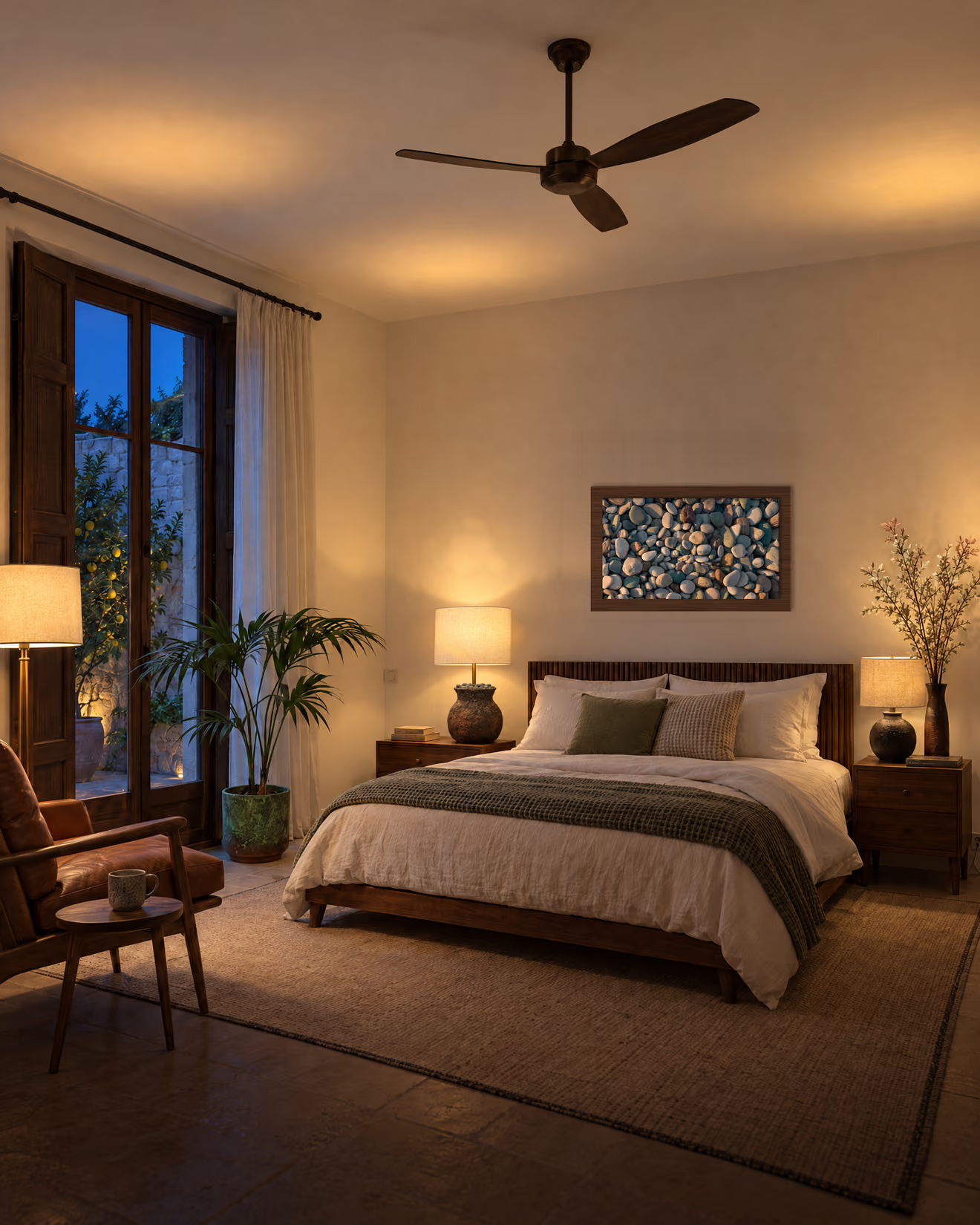
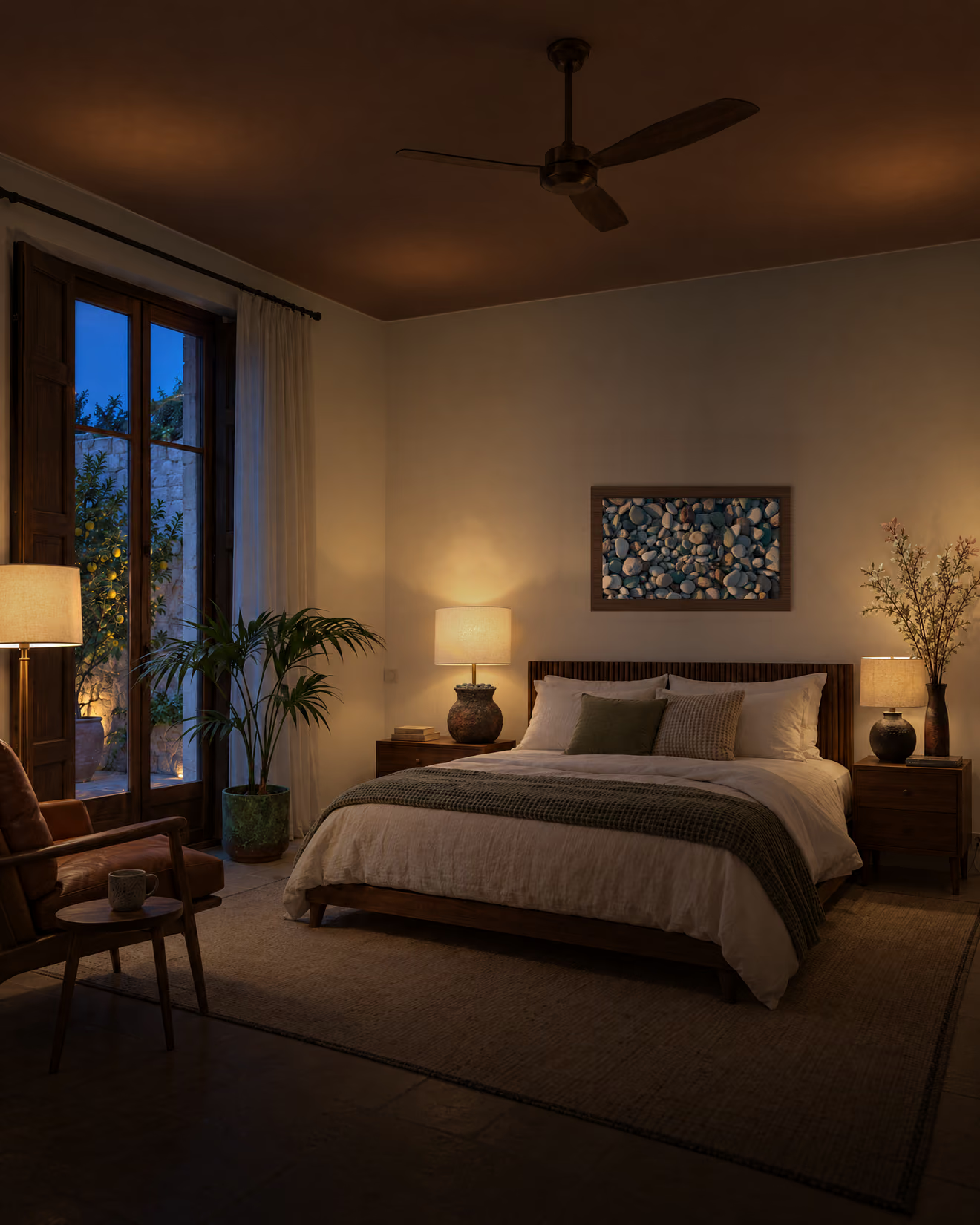
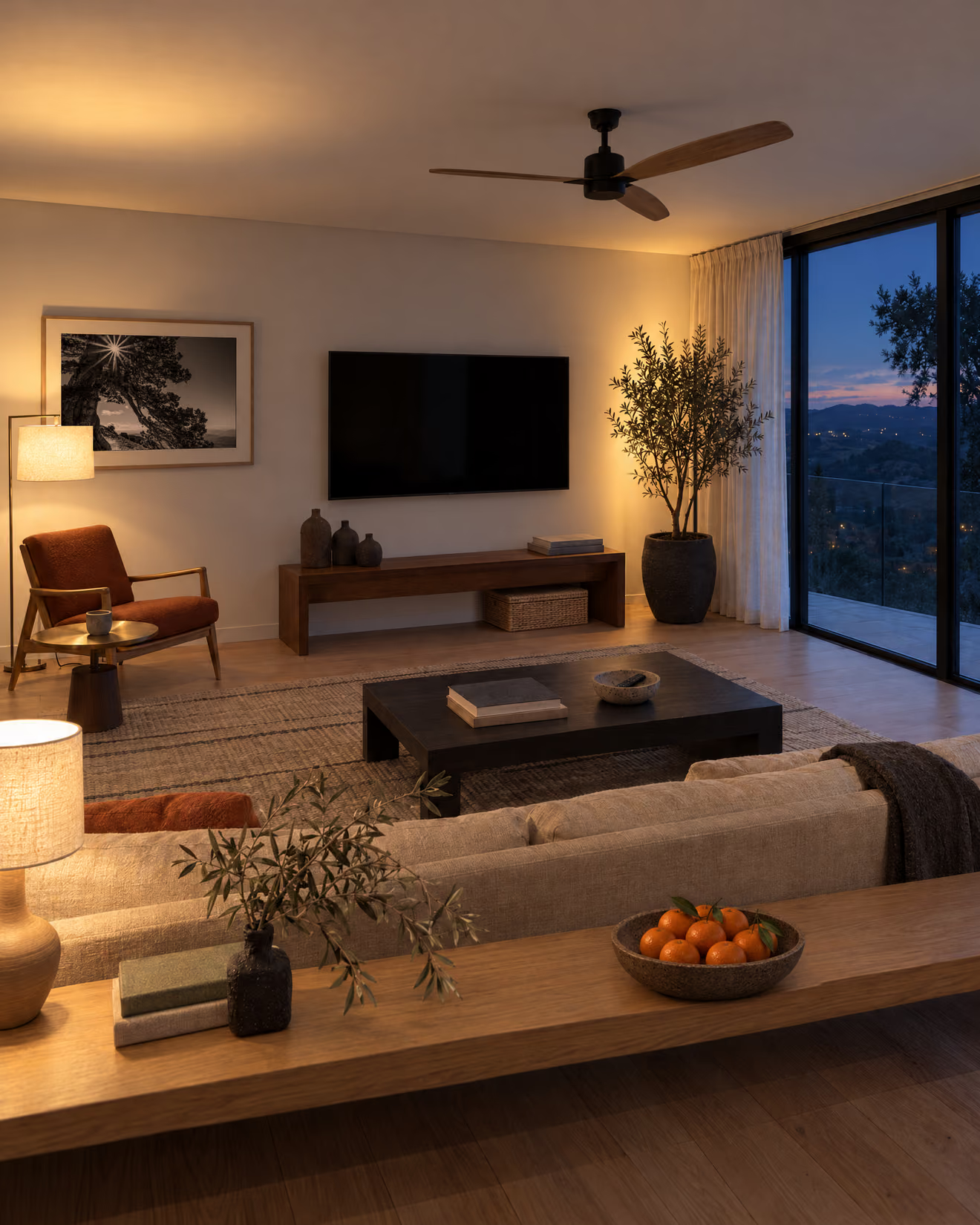
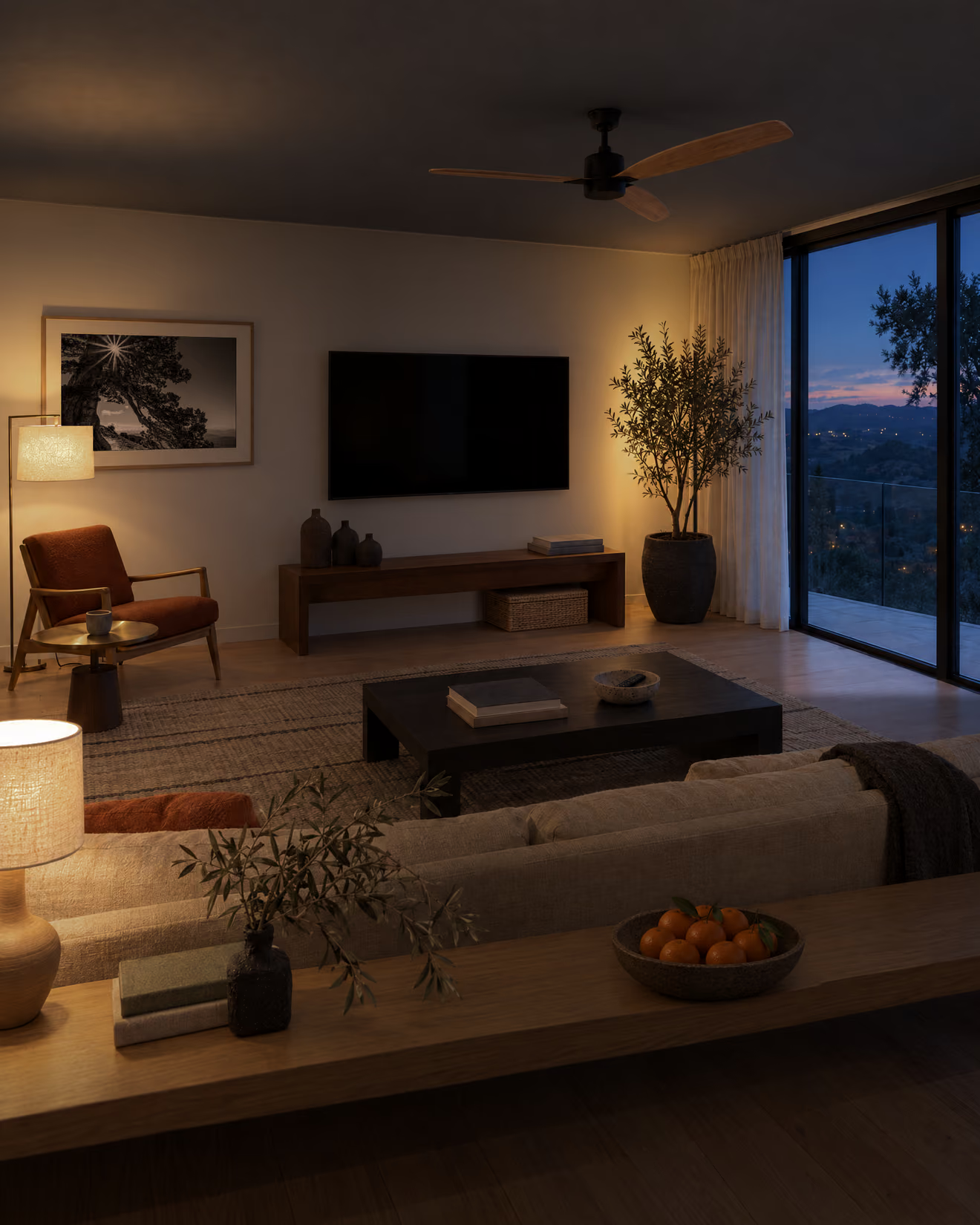
Painted a deep, flat colour over light walls, a ceiling changes the mood of a room more than almost anything else you could paint. The room becomes more intimate, atmospheric and grounded, and in the evening the lamps and their warm pools of light take over. It isn't for every room. The two where I think it works best at home are the bedroom and the TV room. Below are both, each shown twice, so you can compare. Drag across each picture.
The bedroom and the TV room
The bedroom is the obvious one. It's the room you use most after dark, and the one where you most want to feel settled. We chose a dark chocolate brown rather than black. It stays warm under lamplight, and it sits well with the dark timber ceilings you still find in older Cyprus houses.
The TV room has a practical reason too. Home cinemas paint their ceilings dark so that light from the screen doesn't bounce back and wash out the picture. Here we used a warm charcoal, which reads as near black at night but stays soft beside pale oak and linen.
What makes it work
A few things decide whether a dark ceiling feels cosy or heavy.
- Some height. Both rooms here have ceilings close to three metres. In a small, low room with little light, a dark ceiling can tip from cosy into gloomy.
- Light walls. The pale walls catch the lamplight and the ceiling doesn't. That contrast is what you see in the pictures above.
- A flat, matte finish. Any sheen catches the light and shows every flaw. A flat dark ceiling does the opposite: it reflects so little light that cracks, patches and uneven plaster all but disappear. It does need a careful painter, because a missed edge along the top of the wall shows more clearly against a dark colour than against white.
- Warm lamps. Bulbs at 2,700 K, in lamps rather than downlights.
Plan for less light
Look at the floor and the corners in both pictures. With the dark ceiling, the room is noticeably darker, even though nothing about the lamps has changed. A white ceiling sends much of the light that lamps throw upward back down into the room. A dark one absorbs most of it, so the light reflected off the ceiling is significantly diminished, and the room relies on the lamps alone.
So plan for it. Add a lamp, increase the bulb strength, or enjoy the mood. Lamps with shades open at the top still leave a soft glow on a dark ceiling, which is what you see above each lamp in the pictures.
Not sure your room would take a dark ceiling? We can show you your own room both ways, as we have here, before anyone opens a tin of paint.